血管内皮生长因子VEGF抗体
货号:grVE101
简介:
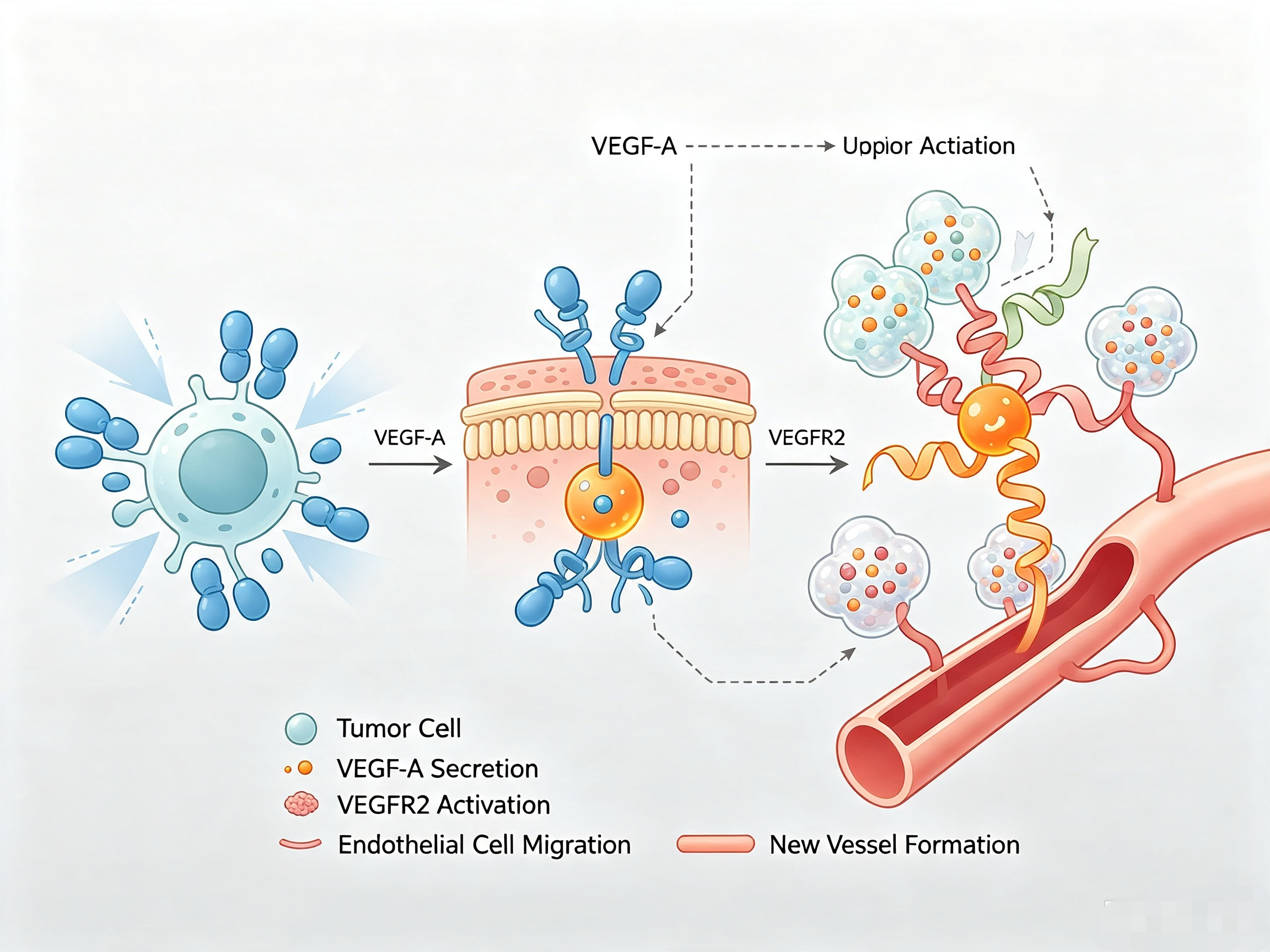
Vascular endothelial growth factor (VEGF) represents a growth factor with important pro-angiogenic activity, having a mitogenic and an anti-apoptotic effect on endothelial cells, increasing the vascular permeability, promoting cell migration, etc. Due to these effects, it actively contributes in regulating the normal and pathological angiogenic processes. In humans, the VEGF family is composed of several members: VEGF-A (which has different isoforms), VEGF-B, VEGF-C, VEGF-D, VEGF-E (viral VEGF), VEGF-F (snake venom VEGF), placenta growth factor (PlGF), and, recently, to this family has been added endocrine gland-derived vascular endothelial growth factor (EG-VEGF). VEGF binds to tyrosine kinase cell receptors (VEGFRs): VEGFR-1 [Fms-like tyrosine kinase 1 (Flt-1)], VEGFR-2 [kinase insert domain receptor (KDR) in human; fetal liver kinase 1 (Flk-1) in mouse] and VEGFR-3 [Fms-like tyrosine kinase 4 (Flt-4)]. While VEGFR-1 and VEGFR-2 are expressed predominantly on vascular endothelial cells, VEGFR-3 is expressed especially on lymphatic endothelial cells. VEGFR-2 has the strongest pro-angiogenic activity and a higher tyrosine kinase activity than VEGFR-1. Endothelial cells also express co-receptors, such as neuropilin-1 (NP-1) and neuropilin-2 (NP-2), which modulate tyrosine kinase receptor activity.